

Save The Bees Act
Louisiana’s bee population has declined by approximately 60%, mirroring a national crisis that has now become the largest honeybee loss ever recorded in the United States. Between June 2024 and March 2025, approximately 1.6 million colonies died across the country, according to surveys from the bee research nonprofit Project Apis m. Commercial beekeepers lost 60% to 80% of their operations. Backyard beekeepers like Mark Welsch of Omaha lost nine of his twelve hives in a single winter.
According to LSU Assistant Professor Morgan Christman, who specializes in pollinator ecology, the economic impact of this collapse is estimated at $600 million nationally, a figure that includes lost honey production, lost pollination income, and the cost of replacing dead colonies. The biggest losses are not just financial, roughly 75% of U.S. crops depend on pollinators. In Louisiana, that includes citrus, strawberries, blueberries, melons, cucumbers, squash and the clover as well as wildflowers that feed our livestock.
Louisiana Agriculture Commissioner Dr Mike Strain has called the bee industry “critical” to the state, nothing that Louisiana has approximately 68,000 colonies and over 760 registered beekeepers, with an industry value of $9 to $10 million in honey production alone, which does not count for crops that depend on pollination, which reaches into billions of dollars.
The causes are now well understood. The Varroa destructor mite, a parasite that attaches to bees, has developed resistance to the miticides used to control it. After the massive die-off in 2024-2025, USDA researchers at the Beltsville Agricultural Research Center moved quickly to identify the cause. Six months later, they pinpointed the likely culprit which is viruses spread by mites.
Pesticides are a compounding crisis. Dalton Lemoine, a multi-generational bee farmer in Deville and owner of Lemoine’s Honey, told the news that chemicals are altering the bees’ behaviour and life. Christman agreed, noting that bees need pesticide-free forage, which is increasingly rare due to vast amounts of pesticides used in BigAg.
The Trump Administration has moved to shut down the USDA Bee Research Laboratory at Beltsville, the very institution tasked with studying these mites, developing resistant bee stocks and finding solutions to the crisis. In July 2025, the USDA announced the entire Beltsville Agricultural Research Center would close over the next few years claiming it is “underutilized and redundant, plagued by rampant overspending and decades of mismanagement and costly deferred maintenance.”
The Beltsville lab is not just any facility. It has been the site of major developments in food and farm research for over a century. The Thanksgiving turkey was developed there. Researchers there linked trans fat consumption to increased cholesterol. The bee research lab itself dates back to 1891, making it one of the oldest federal research programs in the country.
The Maryland Farm Bureau has publicly opposed the closure, sending a letter to the USDA importing the department to modernize the facility rather than close it. Maryland’s congressional delegation has argued the proposed closure is illegal unless the Trump administration gets approval from Congress. The USDA press did not respond to questions about where the bee lab researchers from Beltsville would be moved or how long the closure would take.
This is an abandonment of Louisiana’s farmers and beekeepers at the moment of their greatest need.
I believe that protecting pollinators is not a partisan issue. It is a common-sense issue. It is about protecting our food supply, supporting farmers and preserving the natural beauty and biodiversity of Louisiana.
It is about hope. In a world of crises and conflicts, saving the bees is something we can actually do. It is a tangible, achievable goal that brings people together. It is a fight we cannot afford to lose.
The Save The Bees Act would be a comprehensive federal effort to protect pollinators and the habitats they depend on. It would include the following provisions:
Reopen and Expand Federal Pollinator Research
The first priority is to reverse the Trump Administration’s closure of the USDA Bee Research Laboratory at Beltsville and dramatically expand federal research into pollinator health. This includes:
Reopening and fully funding the USDA Bee Research Laboratory in Beltsville, Maryland, restoring its staff and research programs.
Establishing a Gulf South Pollinator Research Center in Louisiana, in partnership with LSU, Southern University and the existing USDA bee lab in Baton Rouge, to study regional bee health, Varroa mite resistance and pesticide impacts specific to our climate and crops. This center would be modeled on the successful state-level initiative at Texas A&M, where Dr. Garett Slater convinced the Texas Department of Agriculture to fund a bee disease testing lab.
Funding research into Varroa mite resistance, including the development of new treatments, resistant bee stocks and integration of pest management strategies.
Studying the effects of pesticides on pollinators, including neonicotinoids and other chemicals identified in Louisiana pollen samples.
Support citizen science programs that allow Louisiana beekeepers and gardeners to monitor bee populations in their own communities.
Establishing a national pollinator health database to track colony losses and guide policy decisions.
Pollinator Habitat Restoration and Creation
Bees need food and habitat. The bill would establish a dedicated federal grant program to restore and create pollinator habitat across the country. In Louisiana, this would include:
Funding for native wildflower platings along highways, levees and utility rights-of-way.
Grants to farmers and ranchers to plant pollinator-friendly cover crops and hedgerows.
Support for urban pollinator gardens in Lafayette, Lake Charles and other cities and towns in the district.
Restoration of native prairie and wetland habitats that support wild bees and butterflies.
Partnerships with the Louisiana Department of Wildlife and Fisheries and local conservation groups.
Creation of “pollinator corridors” along the Mississippi River and other waterways.
Protect Bees from Pesticide Exposure
Pesticides are harming bees. The bill would take a science-based approach to regulating pesticides that harm pollinators, including:
Requiring the Environmental Protection Agency to assess the impacts of pesticides on pollinators before approving them for use.
Restricting the use of neonicotinoid pesticides, which are particularly harmful to bees, in cases where safer alternatives exist.
Protecting beekeepers from pesticide drift and requiring notification when nearby fields are sprayed.
Supporting integrated pest management practices that reduce reliance on chemical pesticides.
Investing in research on alternative pest control methods.
Encouraging “pollinator-friendly” certification for farms that adopt bee-safe practices.
Public education campaigns to teach home gardeners and farmers how to spray safely or not at all during bloom periods.
Support for Beekeepers and Family Farmers
Emergency relief for beekeepers who have lost colonies, modeled on disaster assistance programs for farmers. The 2024-2025 die-off demonstrated that beekeepers need a safety net just like any other agricultural producers.
Low-interest loans and grants for small-scale and beginning beekeepers.
Crop insurance reform to recognize pollinator-dependent crops more accurately.
Cost-share programs for farmers who adopt pollinator-friendly practices.
Funding for local honey production and marketing, supporting Louisiana’s growing honey industry.
Partnership with LSU and Southern University agricultural extension programs to provide technical assistance to beekeepers.
Support for beekeepers transitioning to mite-resistant bee stocks, as recommended by researchers.
Public Education and Community Engagement
The bill would fund public education and community engagement efforts, including:
School garden programs that teach children about pollinators and food production.
Public awareness campaigns about the importance of pollinators and how to help them.
“Pollinator-Friendly Community” certification programs for towns and parishes that adopt pollinator-friendly practices.
Funding for local beekeeping associations and 4-H and FFA pollinator projects.
Partnerships with Louisiana Master Gardeners and other volunteer organizations.
How We Pay for It
The Save The Bees Act would cost an estimated $3 – $4 billion per year, a modest sum compared to the trillions spent on healthcare, military spending etc, it is also a fraction of the $600 million in annual economic losses caused by pollinator decline. It is also a fraction of what the federal government currently wastes on unnecessary programs and projects such as unused real estate. Washington spends roughly $25 billion per year on vacant, empty or unutilized buildings and properties, removing the $3 – $4 billion from that budget would cover the cost.
However, alternative funding would come from:
A small fee on neonicotinoid pesticide sales, paid by manufacturers, the companies whose products are contributing to the crisis.
Reallocation of existing agricultural subsidy funds toward pollinator-friendly practices.
A portion of the revenue from the Land Value Tax which is listed in the Tax plan.
Federal appropriations as part of a broader investment in conservation and agriculture.
Reversing the Trump Administration’s cuts to USDA research, which currently waste money on the wrong priorities while undermining food security.
This is an investment that pays for itself many times over. Pollinators contribute an estimated $24 billion to the U.S. agricultural economy. Every dollar spent protecting them returns multiples in increased crop yields and reduced food costs.
Louisiana is a state defined by its relationship with the land and water. Our farmers grow rice, sugarcane, soybeans and vegetables. Our gardeners grow tomatoes, peppers and figs. Our honey is among the finest in the nation. Our culture is rooted in the abundance of our soil and the rhythm of our seasons.
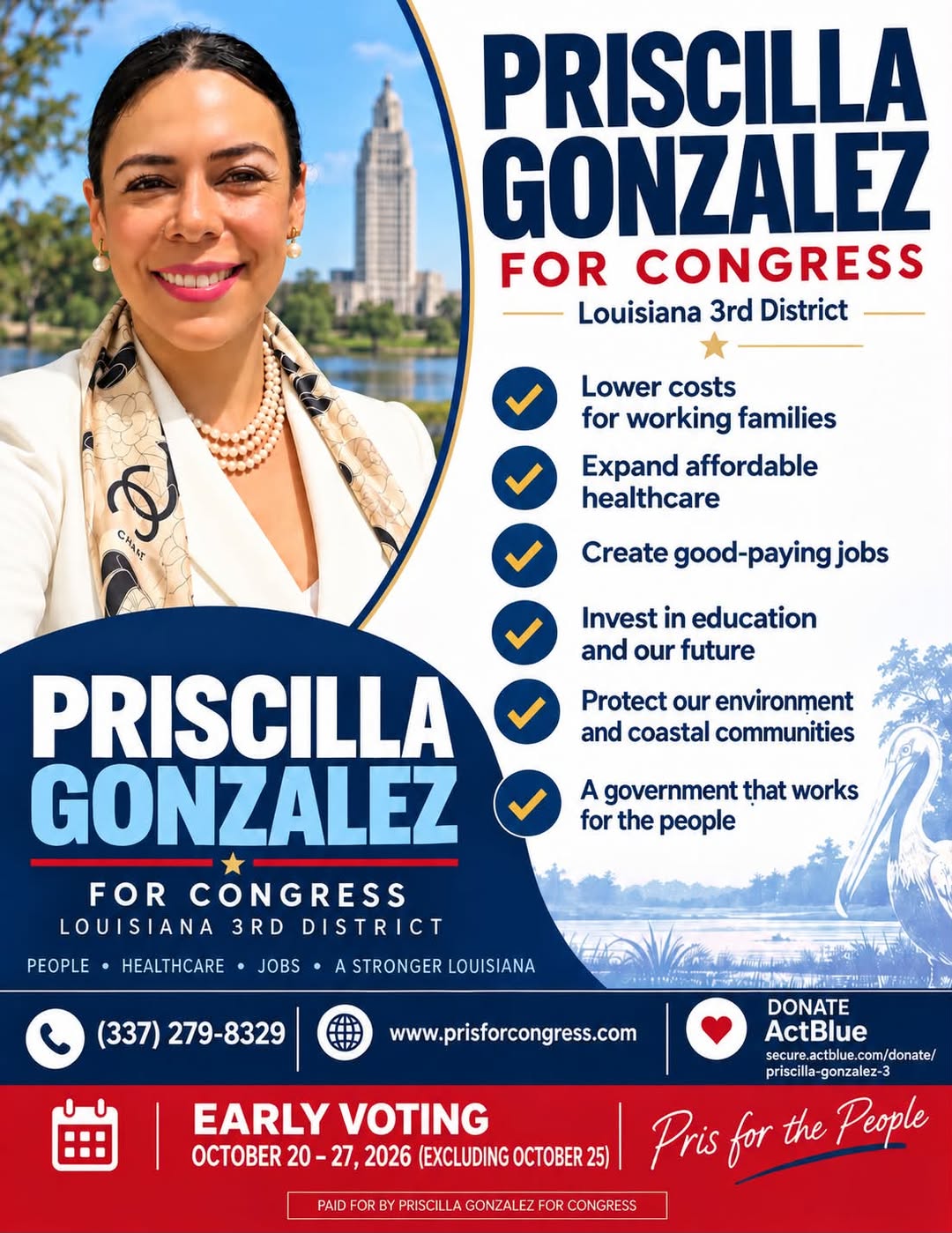
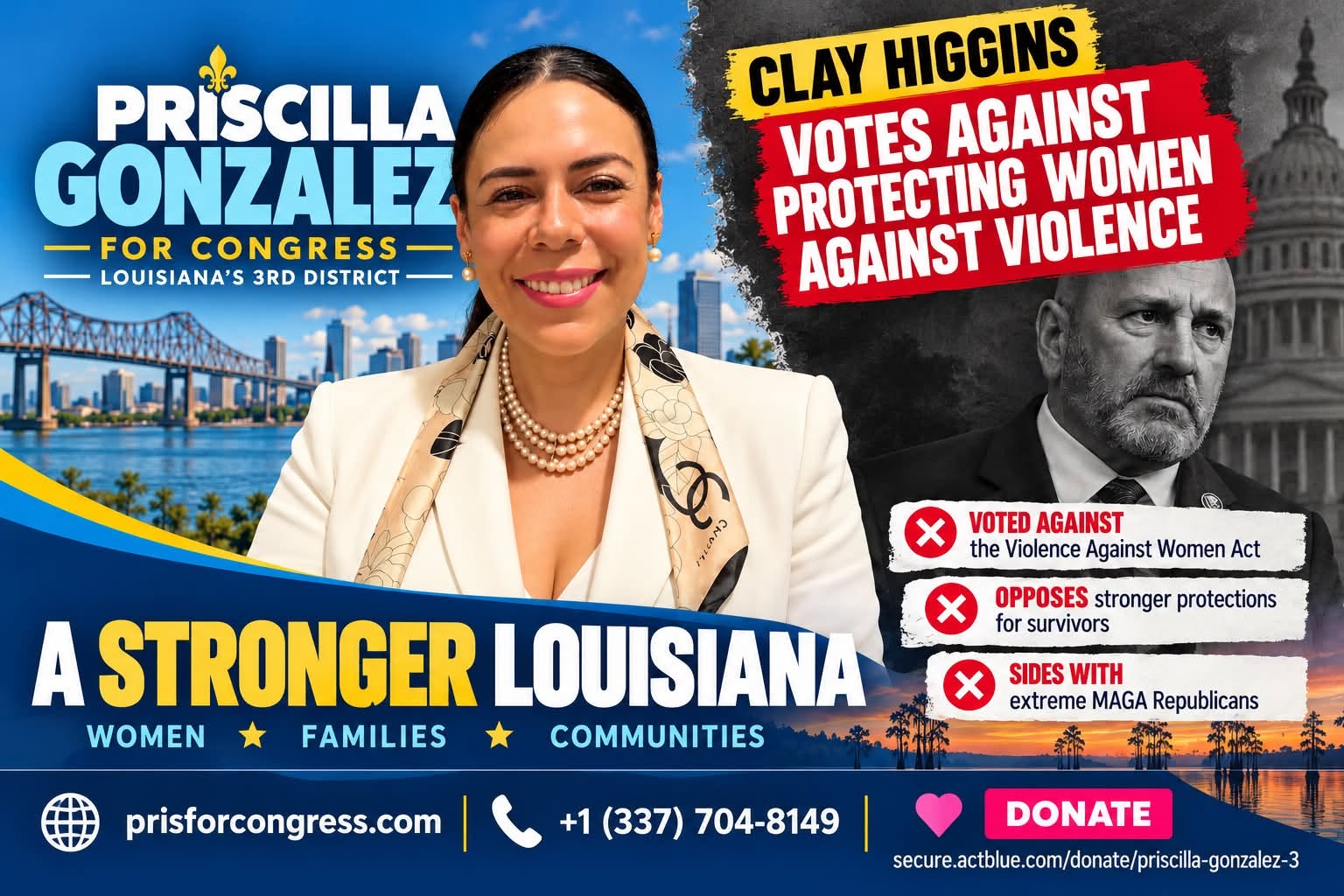
I am running for Congress to be a voice for the people of Louisiana’s 3rd District and the bees.
Let’s save the bees, save the industry and save our future.

Comments are closed.